

How To Choose The Right Trekking Poles In 2026
To choose the right trekking poles, consider weight, as lighter options may be preferable for frequent lifting. Material choices include durable aluminum or lightweight carbon fiber. For adjustment, select a reliable locking mechanism, such as lever-locking, which can be easier to operate in wet conditions. Depending on travel needs, two-section poles may offer sturdiness, while three-section designs allow for more compact packing. Additionally, select grips like cork, foam, or rubber based on personal comfort and environmental conditions.
Quick Answer
To choose the right trekking poles, consider weight, as lighter options may be preferable for frequent lifting. Material choices include durable aluminum or lightweight carbon fiber. For adjustment, lever-locking mechanisms may be easier to use in wet or cold conditions. Select sections based on travel needs; three-section poles are more compact, while two-section poles may offer more sturdiness. Finally, choose grips like foam, cork, or rubber based on personal comfort and environmental conditions.
Table of Contents
Our Top Picks
Affiliate disclosure: if you buy through these links, we may earn a commission at no extra cost to you.

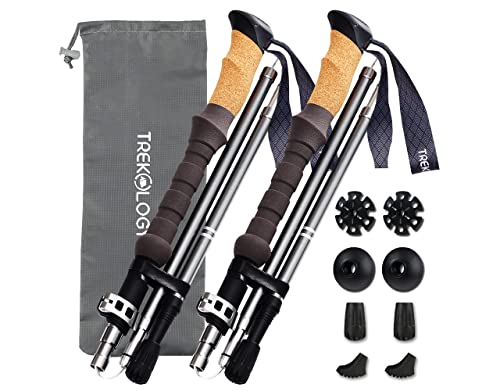

Understanding the Benefits of Trekking Poles
Using trekking poles provides several biomechanical advantages during mountain travel. One primary benefit is the reduction of knee compressive force during descents. By transferring a portion of body weight through the arms to the pole tips before the lead foot lands, the impact absorbed by the knee joint is reduced. Research indicates this can result in a 15-25% reduction in knee load. Beyond joint protection, poles offer several functional advantages. They can assist with uphill propulsion, as the arms contribute roughly 5-10% of the forward drive when poles are pushed backward, which helps reduce quad fatigue during long ascents. They also serve as balance insurance, providing four points of contact to stabilize movement across difficult terrain like snow slopes, talus fields, or river crossings. Additionally, using poles can help maintain cadence discipline by forcing a steady rhythm, which can lead to gains in aerobic efficiency. On days when altitude affects performance, engaging arm muscles can help distribute oxygen demand rather than relying solely on the legs. While using poles increases cardiovascular load because they engage the arms in locomotion, the trade-off often results in significantly reduced leg fatigue during extended expeditions.
Choosing the Right Mechanism and Construction
When choosing the right mechanism and construction for trekking poles, several technical factors influence performance and weight. The locking mechanism is a critical component for stability. Common systems include lever-locking, DuoLock, twist lock, super lock, and stop lock. Lever-locking mechanisms may be easier to adjust during use, particularly in wet or cold conditions. Because different systems can weigh approximately the same, users should ensure they understand their chosen system and can operate it effectively under their specific environmental conditions. Construction often involves two or three sections. Three-section designs allow for more compact packing during travel, while two-section designs may offer increased sturdiness, which can be beneficial for activities like skiing or mountaineering. Material choice also dictates construction characteristics. Aluminum is a durable option that may carry a slight weight penalty, whereas carbon fiber provides a lighter-weight alternative. Weight is a significant factor because poles are lifted repeatedly during a hike. Total weight is influenced by the chosen material, the locking mechanism, the presence of baskets or shocks, and the grip material. Selecting the appropriate construction involves balancing these factors to meet the needs of the intended activity.
Selecting Materials and Grips for Comfort
When selecting materials for trekking poles, the choice between carbon fiber and aluminum shafts involves balancing weight against durability. Carbon fiber shafts offer a weight reduction of 20% to 30% and provide better vibration absorption. However, they may fail catastrophically if subjected to lateral loads beyond their design limits, such as being wedged in a rock crack. Aluminum shafts are heavier but tend to bend rather than break, providing a warning before failure. For high-consequence terrain where reliability is vital, aluminum may be preferable, whereas carbon is often used for weight-sensitive activities like fastpacking. Hybrid shafts, featuring carbon upper sections and aluminum lower sections, attempt to balance these characteristics. Regarding hand comfort, the grip material is a critical factor because hands may remain in contact with the pole for eight to twelve hours during a climbing day. Material choice can significantly impact comfort and the prevention of injury. Four primary material options dominate the market, with each offering specific use cases. Selecting the appropriate material depends on whether the user prioritizes the vibration-dampening properties of carbon or the predictable failure modes of aluminum, alongside the ergonomic needs of the hand during extended use.
Optimizing Fit and Adjustability
To optimize fit and adjustability, users should consider the specific locking mechanism and the appropriate pole height for their physical stature. Reliable locking systems, such as lever-locking, DuoLock, twist lock, super lock, or stop lock, prevent poles from collapsing during use. Lever-locking mechanisms may be easier to adjust while moving, particularly in wet or cold environments. Because various locking systems often weigh approximately the same, users should select a system they can operate effectively under their intended conditions. Regarding height, poles should be selected to suit an individual's height and activity level. Some models are available in regular or tall versions, while others are adjustable. Using poles that extend for downhill hiking may help reduce knee strain. Suggested lengths based on height include 100 cm for those under 5’1”, 110 cm for heights between 5’1” and 5’7”, 120 cm for heights between 5’8” and 5’11”, and 130 cm for those 6’ and taller. Additionally, utilizing wrist straps can allow the wrists to absorb pressure instead of the hands, which may help reduce fatigue. Selecting the correct length and a manageable locking mechanism ensures the poles remain functional for the user's specific needs.
Considering Terrain and Intended Use
When considering terrain and intended use, it is important to recognize that trekking poles may not be ideal for every environment or hiker. Certain conditions can make poles inconvenient, such as sustained scrambling that requires the use of both hands or situations involving climbing ladders and fixed cables. On narrow trails surrounded by dense vegetation, poles may become difficult to manage. Additionally, routes featuring cracks that repeatedly trap pole tips or long stretches of smooth pavement may render them less helpful. The intended use of the equipment can also be influenced by the hiker's activities. For instance, poles might be less practical when a person must frequently use a map or a camera. Some hikers may find that walking without poles on smooth, level ground is preferable because they view the equipment as unnecessary or distracting. Furthermore, using poles can increase total energy expenditure by involving the upper body. While this increased activity can be advantageous during specific types of exercise, it may not be desirable when the main priority is conserving energy. Ultimately, the decision to use poles depends on whether the specific trail conditions or the hiker's goals make the equipment more of a hindrance than a benefit.
Frequently Asked Questions
How do trekking poles help reduce knee-related impact?
When used correctly, trekking poles can reduce knee compressive force by 15–25% during descents. This occurs because the poles transfer a portion of body weight through the arms to the pole tips before the lead foot lands. This mechanism helps reduce the impact absorbed by the knee joint during movement.
What are the differences between carbon and aluminum shafts?
Carbon fiber shafts are lighter and absorb vibration better, but they may fail catastrophically if subjected to lateral loads. Aluminum shafts are heavier but tend to bend before breaking, providing a warning of failure. Carbon is often preferred for weight-sensitive hiking, while aluminum may be more reliable in high-consequence terrain.
How do different locking mechanisms affect pole use?
Different locking systems, such as lever-locking, DuoLock, twist lock, super lock, or stop lock, weigh approximately the same. Lever-locking mechanisms may be easier to adjust while on the go, particularly in wet or cold conditions. Users should understand their specific locking system to ensure they can operate it effectively under their intended environmental conditions.
When might trekking poles be less helpful or inconvenient?
Trekking poles may be inconvenient during sustained scrambling, climbing ladders, or navigating narrow trails with dense vegetation. They can also be less helpful on smooth pavement, when using maps or cameras, or on routes with cracks that trap tips. Additionally, they might interfere with natural movement, strain wrists, or increase energy expenditure by involving the upper body.
How do wrist straps affect hand fatigue?
Using wrist straps properly can help reduce fatigue. When used correctly, these straps allow the wrists to absorb pressure instead of the hands. This function helps minimize hand strain during use. Proper application of these straps can be a helpful way to manage pressure, as they allow the wrists to absorb the force rather than the hands.
To select the right trekking poles, consider borrowing a pair from a friend or testing them during a guided hiking trip. This practical step allows you to practice using them and observe the preferences of other hikers. Such hands-on experience can help you make a more informed decision when choosing a pair that fits your specific needs.


