

How To Choose The Right Camping Power Stations 2026
By Ryan Caldwell
For years, I lived by a simple rule: if it doesn't hang off my back or fit in my pack, it doesn't exist. But as my gear list evolved from roughing it to comfort camping, and eventually to documenting thru-hikes with video, the silence of the trail was broken by the need for reliable power. Whether you are charging a satellite communicator on a remote ridge, running a small fan in a hammock during a humid July night, or keeping a GoPro charged for a week-long trek, choosing the wrong power source can mean dead batteries and missed moments. The market has shifted from bulky gas generators to sophisticated lithium-ion bricks, but not all "ultralight" claims hold up when you're miles from civilization.
Our Top Picks
Affiliate disclosure: if you buy through these links, we may earn a commission at no extra cost to you.

Table of Contents

Quick Answer
To choose the right camping power station for 2026, prioritize capacity (measured in Watt-hours) over peak output, and strictly evaluate your "watt draw" against the unit's efficiency rating. For most backpackers, a sub-2kg unit under 300Wh is the sweet spot for balancing weight and utility, while car campers should look for units above 500Wh with robust AC inverters. Always calculate total daily consumption (phone + headlamp + camera) multiplied by your trip duration before buying.
The Math: Watt-Hours vs. Real World Usage
The biggest mistake hikers make is looking at the price tag or the brand name rather than doing the math on their specific gear list. A power station is rated in Watt-hours (Wh). To understand what you actually need, you must calculate your daily draw. For example, a standard smartphone battery is roughly 10-15Wh. If you charge your phone twice a day for a 7-day trip, that's about 210Wh of capacity needed just for the phone, ignoring efficiency losses.
Efficiency is the hidden killer of power station runtime. Converting DC battery power to AC wall outlet power (inverter) or stepping down voltage for USB-C PD (Power Delivery) loses energy as heat. A high-quality unit might be 85% efficient, while a cheap budget option might drop to 60%. This means a 500Wh station might only deliver 300Wh of usable power. Always assume you will get about 70-80% of the rated capacity in real-world hiking conditions.
Weight Classes and Packability
In our world, weight is currency. I divide portable power into three distinct tiers based on my hiking style. First, the "Ultralight" tier (under 1.5kg / 3.3lbs). These are typically small lithium banks with USB-C PD output only. They are perfect for carrying a Garmin inReach or charging a headlamp, but they cannot run AC devices like a mini-fridge or a laptop. Second, the "Mid-Weight" tier (1.5kg - 4kg / 3.3lbs - 9lbs). This is the sweet spot for car camping and base-camp hiking. You get AC outlets and higher capacity without breaking your back. Third, the "Heavy Duty" tier (over 4kg / 9lbs). These are essentially house batteries in a box. They are great for long-term overlanding but useless for anyone carrying their gear on their shoulders.
Packability matters just as much as weight. A bulky rectangular brick is hard to fit into a stuff sack alongside your sleeping bag and tent. Look for units with rounded edges or modular designs that allow you to strap them to the outside of a pack if necessary, though never hang heavy power stations from suspension points designed for water or food.
Charging Speeds and Solar Compatibility
How you recharge is as important as how much power you store. In 2026, the standard for fast recharging is passing-through charging (AC wall) combined with high-wattage solar input. If you plan to hike for weeks, you need a station that accepts at least 100W of solar input. Check the MPPT (Maximum Power Point Tracking) controller built into the unit; a good internal MPPT will harvest power from your panels much faster than an external controller.
Consider the "dead time." If your station takes 6 hours to charge from a wall outlet and 8 hours from solar, you need to plan your campsite electricity access carefully. Some newer models allow you to charge via car cigarette lighter (12V) while driving to a trailhead, which can top up a depleted battery in 3-4 hours. If you are strictly off-grid, prioritize solar input wattage over AC charging speed.
Durability and Weather Resistance
Hiking gear takes abuse; power stations should too. However, most power stations are not waterproof. They are water-resistant at best. I have seen units fail because rain got into the USB ports, causing a short circuit. Always look for an IP rating (Ingress Protection). An IP65 rating means dust-tight and protected against low-pressure water jets. Anything less requires you to keep the unit in a dry bag at all times.
Thermal management is another durability factor. Lithium batteries degrade quickly if exposed to extreme heat or cold. If you are camping in high alpine conditions where temperatures drop below freezing, the battery's internal chemistry will slow down, reducing its effective capacity by up to 30%. Keep the power station inside your sleeping bag at night to maintain performance and protect the cells from thermal shock.
Inverter Quality: Pure Sine vs. Modified
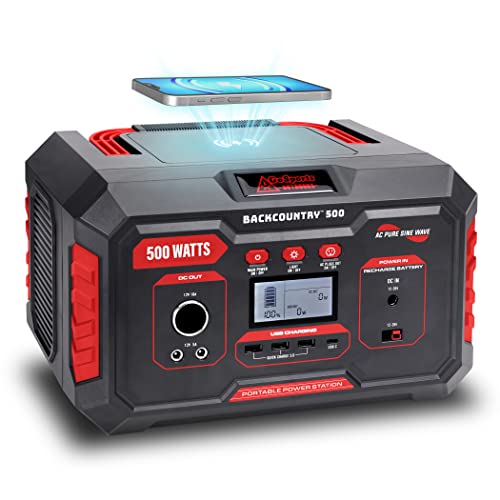
If you plan to plug in sensitive electronics like laptops, drones, or medical devices (like CPAP machines), the type of inverter is critical. Cheap power stations use "Modified Sine Wave" inverters. These produce a jagged electrical signal that can cause humming noises in fans and motors, and worse, it can damage the internal power supply of sensitive electronics. You must choose a "Pure Sine Wave" inverter. It produces clean, stable electricity identical to what comes out of your wall outlet at home.
The trade-off? Pure Sine Wave inverters are heavier and more expensive because they require more complex circuitry. However, for any gear worth carrying into the wild, the protection it offers is non-negotiable. A $200 power station with a pure sine wave inverter will save you from destroying a $1,000 drone or laptop.
Frequently Asked Questions
Can I take a power station on a plane?
Yes, but with strict limits. The FAA and most international airlines allow lithium batteries under 100Wh without approval. Between 100Wh and 160Wh, you usually need airline permission (limited to two spares). Anything over 160Wh is generally prohibited in carry-on or checked luggage. Always check your specific airline's policy before booking.
Do power stations work in the rain?
No, not directly. While the casing might be water-resistant, the ports are vulnerable. You must keep the unit in a dry bag or under a tarp. Never leave it exposed to direct rainfall for extended periods.
How long do power stations last?
Lithium-ion batteries degrade over time. A good quality station will retain 80% of its original capacity after 500-1,000 full charge cycles. If you use it once a year for camping, it might last 5-7 years before noticeable degradation. If you use it daily, expect to replace the core battery or unit in 2-3 years.
Is solar charging practical for backpacking?
For ultralight backpacking, no. The weight of rigid solar panels makes it impractical. However, flexible solar sheets (like those from BigBlue or Anker) can be strapped to a pack while hiking, providing trickle charges that extend your runtime significantly on long thru-hikes.
What is the difference between mAh and Wh?
mAh (milliamp-hours) is a measure of charge at a specific voltage, while Wh (Watt-hours) is the true measure of energy capacity. You cannot compare a 20,000mAh phone bank directly to a 500Wh power station without converting units. Wh is the standard you should use for comparing large power stations.
Can I charge my power station while using it?
Most modern "pass-through charging" models allow this. You can plug the station into a wall outlet or solar panel while simultaneously charging your devices. However, doing so generates more heat, which can slightly reduce the lifespan of the battery over time. Use this feature for convenience, not as a permanent solution.
Conclusion
Choosing the right camping power station in 2026 comes down to balancing your energy needs against the weight you are willing to carry. There is no single "best" unit, only the best tool for your specific trail profile. For short trips, a small USB-C bank is sufficient. For base camps, a pure sine wave inverter with solar compatibility is essential. Start by auditing your gear's wattage, pick a weight class you can live with, and invest in quality that protects your electronics from the elements. Don't let dead batteries kill your adventure; plan your power just as carefully as you plan your water.


