Camping Tents Vs Trekking Poles Which Should You
Camping Tents vs Trekking Poles: Which Should You Buy in 2026
By Ryan Caldwell
Camping tents and trekking poles solve different problems, which makes this comparison less straightforward than choosing between two similar shelters. A tent gives you weather protection and sleeping space. Trekking poles provide stability on the trail—and, when paired with a compatible trekking-pole tent, can also serve as the shelter’s structural supports.
This distinction matters before you compare cost or pack weight. A freestanding camping tent is a complete shelter system, while a pair of trekking poles is only one component of a hiking setup. If you are choosing gear for car camping, family trips, or exposed alpine use, start with the tent. If you are building a lighter backpacking kit and already want poles for hiking, a trekking-pole shelter can reduce duplicate equipment.
Affiliate disclosure: if you buy through these links, we may earn a commission at no extra cost to you.

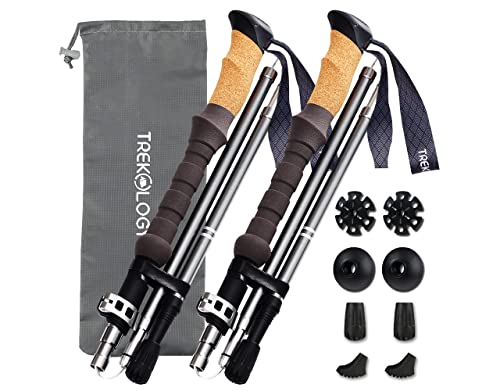

Table of Contents
- Our Top Picks
- Quick Verdict
- About Camping Tents
- About Trekking Poles
- Head-to-Head: Pack Weight and Packed Size
- Head-to-Head: Weather Performance
- Head-to-Head: Setup and Convenience
- Head-to-Head: Durability and Trail Use
- Who Should Choose Camping Tents?
- Who Should Choose Trekking Poles?
- Our Verdict
- Frequently Asked Questions
- Sources & References
- Relevant Products for This Topic
Our Top Picks
Affiliate disclosure: if you buy through these links, we may earn a commission at no extra cost to you.
Quick Verdict
Choose Camping Tents if...
- You want a complete shelter that can stand without trekking poles.
- You camp on hard, frozen, sandy, or exposed ground where staking is difficult.
- You prioritize simple setup, beginner-friendly pitching, or more flexible family and group space.
Choose Trekking Poles if...
- You are backpacking and want one pair of poles to support both hiking and a compatible shelter.
- Reducing pack weight matters more than having a completely freestanding tent.
- You normally camp in soil, forests, or meadows where stakes and guy lines can be placed securely.
| Factor | Camping Tents | Trekking Poles |
|---|---|---|
| Relative Cost | The Amazon examples include the FanttikOutdoor Zeta C6 Pro, CAMPROS CP 8 Person, and Coleman Sundome lines. Their prices and exact specifications are not established here, so a reliable cost ranking is not possible. | The Amazon examples include Trekology Trek-Z, Cascade Mountain Tech, and KINGGEAR 7075 aluminum poles. Their prices and packed weights are not established here. Remember that poles alone are not a shelter. |
| Best For | Car camping, family camping, beginners, and situations where a freestanding shelter is more convenient. | Backpacking and thru-hiking when paired with a compatible trekking-pole tent. |
| Setup Difficulty | Usually more intuitive for beginners. Freestanding tents are reported by GearSift to take approximately 2 to 3 minutes to pitch. | Requires correct stake placement, pole height, tension, and guy-line adjustment. GearSift reports approximately 3 to 5 minutes for experienced-style pitching. |
| Reliability | More forgiving on hard surfaces, frozen ground, deep sand, and exposed alpine terrain because the shelter is not dependent on trekking-pole staking. | Reliable when properly staked and tensioned on normal soil, but less convenient where stakes cannot hold. |
| Key Advantage | Complete weather protection with flexible placement and no need to use hiking poles as shelter supports. | Potentially lower total shelter weight by avoiding a dedicated tent-pole set. |
| Main Drawback | Dedicated poles can add packed weight and bulk, especially compared with a lightweight trekking-pole shelter. | The poles are not a shelter by themselves, and the compatible tent usually needs stakes, guy lines, and suitable ground for a dependable pitch. |
About Camping Tents
For this comparison, “camping tents” means conventional or freestanding tents such as the FanttikOutdoor Zeta C6 Pro 6 Person Tent, CAMPROS CP 8 Person Camping Tent, and Coleman Sundome range listed on Amazon. Those products represent the kind of shelter a camper buys as a complete tent system rather than assembling a shelter around hiking poles. Their exact packed weights, materials, weather ratings, and prices are not provided here, so they should be checked on the current product listings before purchase.
The practical advantage is versatility. A freestanding tent can be moved before staking, is generally easier for a first-time user to understand, and remains more convenient when the ground is hard, frozen, very sandy, or otherwise poor for stakes. GearSift describes freestanding tents as taking approximately 2 to 3 minutes to set up, compared with approximately 3 to 5 minutes for trekking-pole tents. After learning a trekking-pole pitch, however, the difference may be only a minute or two.
Weather performance depends on the specific tent, not simply on whether it is sold as a camping tent. Look for a full rainfly, properly protected seams, adequate vestibule coverage, and a design that can be tensioned in wind. Durability likewise comes down to fabric, pole construction, seam work, floor design, and how carefully the tent is packed. Without verified specifications for the Amazon examples, there is no honest way to rank their packed weight or storm performance.
About Trekking Poles
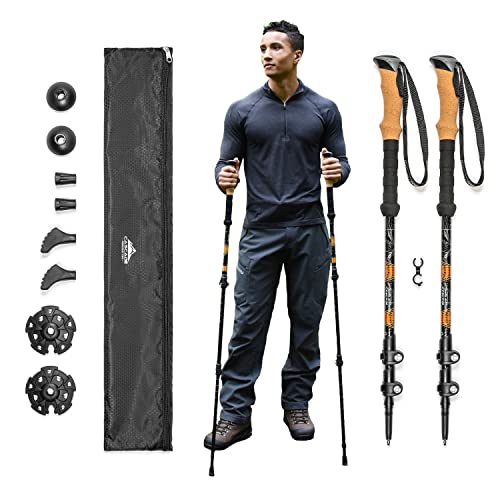
Trekking poles are walking tools first. They can improve balance, reduce some of the load on descents, and make rough terrain more manageable, but they do not provide sleeping space or rain protection on their own. A purchase such as the Trekology Trek-Z Cork Grip, Cascade Mountain Tech, or KINGGEAR 7075 aluminum poles becomes a shelter-related decision only if you also choose a trekking-pole tent designed around the poles’ length and structure.
The weight advantage comes from sharing equipment. Trekking-pole tents use hiking poles as structural supports, eliminating the need to carry a dedicated tent-pole set. GearSift reports that trekking-pole tents save approximately 8 to 16 ounces on average compared with freestanding tents, with average weights of about 28 ounces for silpoly trekking-pole tents versus about 38 ounces for ultralight freestanding tents. Those figures describe tent categories, not the packed weights of the Amazon trekking poles listed above.
A useful reference point is the Zenith 2.0 A-Frame Trekking Tent. TheTentTown lists it at 3.57 pounds, with two-person capacity, a PU 3000 mm waterproof rating, a 14 x 5.5 x 5.5-inch packed size, full seam sealing, stakes, and guy lines. It is presented as a reliable choice for beginner to intermediate backpackers, but not as an ideal option for ultralight thru-hikers. The example shows why “trekking-pole tent” does not automatically mean ultralight: design, fabric, hardware, and included components still determine the final packed weight.
Head-to-Head: Pack Weight and Packed Size
A conventional tent carries a dedicated pole set, while a trekking-pole shelter can use poles you already need for hiking. That can produce a meaningful reduction in shelter weight. GearSift reports an average difference of approximately 8 to 16 ounces, which is substantial on a long-distance trail where every item is carried for hundreds of miles.
The saving is not automatic. You still need trekking poles, stakes, guy lines, and the shelter body. If you do not hike with poles, buying a pair solely to support a tent changes the calculation. The Zenith 2.0 illustrates the other side of the category: its listed 3.57-pound weight is heavier than the ultralight trekking-pole-tent average reported by GearSift, despite using an A-frame trekking-pole design.
Head-to-Head: Weather Performance
A freestanding tent is usually the safer general-purpose choice when conditions make staking difficult. Trekking-pole tents depend on solid anchor points and careful tension, so deep sand, frozen ground, hard surfaces, and exposed alpine terrain can make pitching less convenient or less secure. A freestanding tent is not automatically stormproof, but its structure is less dependent on every stake holding perfectly.
In ordinary forest and meadow soil, a well-pitched trekking-pole tent can perform effectively. The Zenith 2.0 is listed with full seam sealing and a PU 3000 mm waterproof rating, along with stakes and guy lines. Those details are more useful than the label alone, because weather performance depends on actual waterproofing and tensioning. For either style, pitch selection, drainage, ventilation, and correct guy-line use matter as much as the category.
Head-to-Head: Setup and Convenience
Freestanding tents have the easier learning curve. Their poles define much of the structure, and the shelter can often be assembled before final staking. That is useful when you are tired, when rain is arriving, or when you need to reposition the tent to find a better patch of ground.
Trekking-pole tents require more attention to stake geometry, pole height, corner tension, and guy lines. TheTentTown lists the Zenith 2.0’s setup time at approximately 3 minutes, while GearSift reports approximately 3 to 5 minutes for trekking-pole tents overall. The difference becomes less important after several practice pitches; in normal soil, experienced users may find the extra minute or two insignificant over a multi-day trip.
Head-to-Head: Durability and Trail Use
For trail durability, a lighter shelter must still withstand repeated packing, abrasion, wet ground, wind, and frequent pitching. A freestanding tent’s dedicated pole system adds weight and another item to protect, but it can make the structure more forgiving when the pitch is imperfect. A trekking-pole shelter has fewer dedicated structural components, but the stakes, tie-outs, fabric, and pole interfaces become especially important.
Do not judge durability from product names or pole material alone. The Amazon listings identify options such as KINGGEAR 7075 aluminum poles, but that name does not establish the complete pole weight, locking-system durability, or compatibility with a specific tent. For a thru-hiking setup, verify packed weight, replacement-part availability, pole height range, fabric specifications, and the strength of the shelter’s tie-outs before committing.
Who Should Choose Camping Tents?
Choose a conventional camping tent if you want the least complicated path to a complete shelter. It is the better fit for car camping, family trips, first-time campers, and trips that may include hard ground or exposed campsites. It also makes sense when you want your shelter to remain usable without carrying trekking poles.
The trade-off is weight and bulk. A dedicated pole set can be less attractive in a backpack than a shelter that uses equipment you already carry. Because the exact Amazon tent weights and weather specifications are not established here, compare the packed weight and rainfly design directly rather than assuming a larger tent or a familiar brand will be more durable.
Who Should Choose Trekking Poles?
Choose trekking poles when you already hike with poles and are willing to pair them with a compatible trekking-pole tent. This is the efficient choice for many backpackers and thru-hikers because the same equipment supports both walking and shelter setup. GearSift reports that trekking-pole tents are used more frequently than freestanding tents on the Pacific Crest Trail and Appalachian Trail, at roughly a 2-to-1 ratio in its summary of Halfway Anywhere survey data.
This setup suits hikers who camp primarily in forests, meadows, and other places with stakeable soil. It is less appealing if you regularly camp above treeline, on frozen ground, on deep sand, or anywhere a secure stake layout is difficult. TheTentTown identifies the Nature Link Altair One as its overall best trekking-pole tent, the LANSHAN 1-Person as a budget-friendly option, and the LANSHAN 2-Person as a versatile two-person option; those category recommendations still need to be checked against your required packed weight and conditions.
Our Verdict
For most backpackers who already use hiking poles, choose trekking poles—but only as part of a compatible trekking-pole shelter system. The ability to use one piece of gear for both hiking and tent support is the strongest weight-saving argument, and the reported 8- to 16-ounce shelter reduction can matter on a long trail.
For general camping, beginners, family use, or difficult ground, choose a conventional camping tent. It is the more dependable and convenient shelter format when you cannot count on good staking conditions. The important correction is that this is not really a tent-versus-poles purchase: a tent protects you from weather, while poles only become shelter equipment when matched with the right tent.
Frequently Asked Questions
Can trekking poles replace tent poles?
They can replace a dedicated tent-pole set only when the tent is specifically designed as a trekking-pole shelter. Ordinary camping tents are not automatically compatible with hiking poles.
Are trekking-pole tents lighter than freestanding tents?
Often, but not always. GearSift reports savings of approximately 8 to 16 ounces on average, with average weights of about 28 ounces for silpoly trekking-pole tents and about 38 ounces for ultralight freestanding tents. The individual tent’s materials and included components determine its actual packed weight.
Are trekking-pole tents harder to set up?
They usually have a steeper first-pitch learning curve because stake placement and tension matter. GearSift reports approximately 3 to 5 minutes for trekking-pole tents versus approximately 2 to 3 minutes for freestanding tents. After practice, the difference may have little practical impact.
Which shelter works better on hard or frozen ground?
A freestanding tent is generally more convenient because a trekking-pole tent requires stakes and tension to establish its structure. Hard surfaces, frozen ground, deep sand, and exposed alpine terrain can all make a trekking-pole pitch more difficult.
Is the Zenith 2.0 a good ultralight thru-hiking tent?
TheTentTown lists the Zenith 2.0 at 3.57 pounds with a two-person capacity, PU 3000 mm waterproof rating, full seam sealing, stakes, and guy lines. It is recommended there for beginner to intermediate backpackers, but it is not positioned as an ideal choice for ultralight thru-hikers.
Sources & References
Relevant Products for This Topic
As an Amazon Associate we earn from qualifying purchases at no extra cost to you.